
Introduction
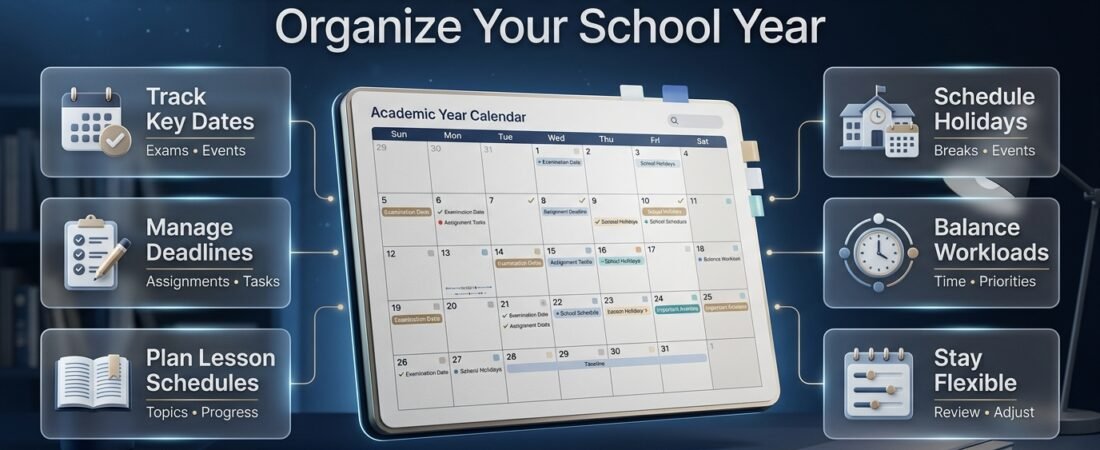
Academic Year Calendar Planner | An academic year can become overwhelming when examination dates, assignment deadlines, school holidays, registration periods, and important events are scattered across different notes and messages. Students may miss deadlines, teachers may struggle to balance lessons with assessments, and administrators may face unnecessary scheduling conflicts simply because everyone isn’t working from the same plan.
An effective academic year calendar planner solves this problem by bringing important academic dates, responsibilities, and activities into one organized system. Whether you’re a student preparing for examinations, a teacher planning lessons, a parent managing school commitments, or an administrator coordinating an institution, a well-structured calendar helps you see what’s coming and prepare for it in advance.
The goal isn’t to fill every day with tasks. It’s to make the academic year easier to understand, manage, and adjust when circumstances change. For more educational planning resources, visit RTI Scheduler.
In this guide, you’ll learn how to build an academic year calendar, select the right planning format, organize deadlines, balance academic workloads, avoid common scheduling mistakes, and create a practical system that remains useful throughout the year.
What Is an Academic Year Calendar Planner?
An academic year calendar planner is an organized schedule that displays important educational dates and activities across a school, college, university, or individual student’s academic year. It typically includes term dates, holidays, examination periods, assignment deadlines, registration dates, school events, and other milestones that affect learning and administration.
Unlike a basic calendar that simply shows days and months, an academic calendar is structured around the educational cycle. It helps users understand how different activities fit together and how much time is available before important deadlines.
For example, a university student might use an academic calendar to track semester registration, coursework submissions, midterm examinations, and final exams. A school administrator may use the same type of calendar to coordinate teaching weeks, parent meetings, staff development, holidays, and examination arrangements.
The format can be simple or advanced. Some people prefer a printable yearly calendar, while others use spreadsheets, digital calendars, or specialized academic scheduling systems.
The most useful planner is the one that reflects your actual responsibilities, remains easy to update, and makes important dates clear at a glance.
Who Needs an Academic Year Calendar Planner?
Different users need different types of information, so the calendar should be designed around its intended audience.
| User | Important calendar details | Main purpose |
|---|---|---|
| Students | Exams, assignments, projects, revision sessions | Manage study time |
| Teachers | Teaching weeks, lesson milestones, grading dates | Organize instruction |
| Parents | Holidays, school events, meetings, activity dates | Coordinate family routines |
| School administrators | Term dates, staff training, closures, enrollment | Manage operations |
| University departments | Registration, assessments, room bookings, results | Coordinate academic activities |
| Homeschooling families | Learning goals, subject schedules, breaks | Maintain a flexible learning routine |
A student doesn’t necessarily need to see every staff meeting, and parents may not need access to internal departmental deadlines. The calendar should show the information relevant to each group without overwhelming users with unnecessary details.
How Is an Academic Calendar Different From a Regular Calendar?
A regular calendar focuses on dates, weekdays, and months. An academic calendar connects those dates to educational responsibilities.
For example, a regular calendar shows that June 15 falls on a particular day. An academic planner might identify June 15 as the final examination date, display the registration deadline several weeks earlier, and include revision milestones leading up to the exam.
That additional context turns a calendar into a planning tool.
Why Is an Academic Year Calendar Planner Important?
An academic year calendar planner helps people prepare for educational responsibilities before they become urgent. It makes deadlines visible, improves coordination, supports realistic workloads, and reduces the confusion caused by scattered or outdated information.
Its value becomes especially clear during busy periods when several subjects, departments, or family responsibilities compete for attention.
1. It Helps Prevent Missed Deadlines
When important dates are recorded in one reliable place, users can see what needs attention and when action is required.
A student can identify an upcoming assignment and divide it into smaller tasks. A teacher can schedule time for grading before report cards are due. An administrator can send reminders about registration deadlines before students lose the opportunity to complete the process on time.
The calendar doesn’t eliminate the need for responsibility, but it makes deadlines easier to recognize and manage.
2. It Improves Time Management
A calendar provides a realistic overview of available time.
Suppose a term contains 12 teaching weeks, but one week includes a public holiday and another is reserved partly for examinations. A teacher who plans the entire curriculum as though all 12 weeks were uninterrupted may struggle to finish the required material.
An academic planner makes these limitations visible before teaching begins. The teacher can adjust lesson sequences, prioritize essential learning outcomes, and reserve time for review.
Students benefit in the same way because they can identify demanding weeks and begin preparing earlier.
3. It Supports Better Study Habits
Students often know their examination dates but underestimate how much preparation they need.
A calendar helps transform a distant deadline into manageable actions. Instead of writing only “prepare for biology exam,” a student can schedule topic reviews, practice questions, revision sessions, and time to address weak areas.
This approach encourages consistent preparation rather than relying entirely on last-minute studying.
4. It Makes School and Family Coordination Easier
Parents often manage several responsibilities at once, including work, school transportation, appointments, extracurricular activities, and homework routines.
A shared academic calendar gives families a clearer picture of upcoming commitments. Parents can prepare for school events, arrange transportation for educational trips, and help children plan around examinations.
When the school changes a date, having one official source also reduces the chance that family members will continue relying on an outdated schedule.
5. It Helps Institutions Identify Scheduling Conflicts
An individual teacher may plan an assessment without knowing that another department has scheduled a major examination for the same day.
When all major dates are visible in a shared calendar, administrators can identify conflicts earlier. They can review room availability, teacher workloads, student assessment schedules, and event arrangements before finalizing the timetable.
This is especially valuable in larger institutions where multiple departments depend on the same facilities and staff.
💡 Pro Tip: Use one approved master calendar as the official source of academic dates. Individual students, teachers, and parents can maintain personal reminders, but those reminders should follow the latest approved schedule.
What Should an Academic Year Calendar Include?
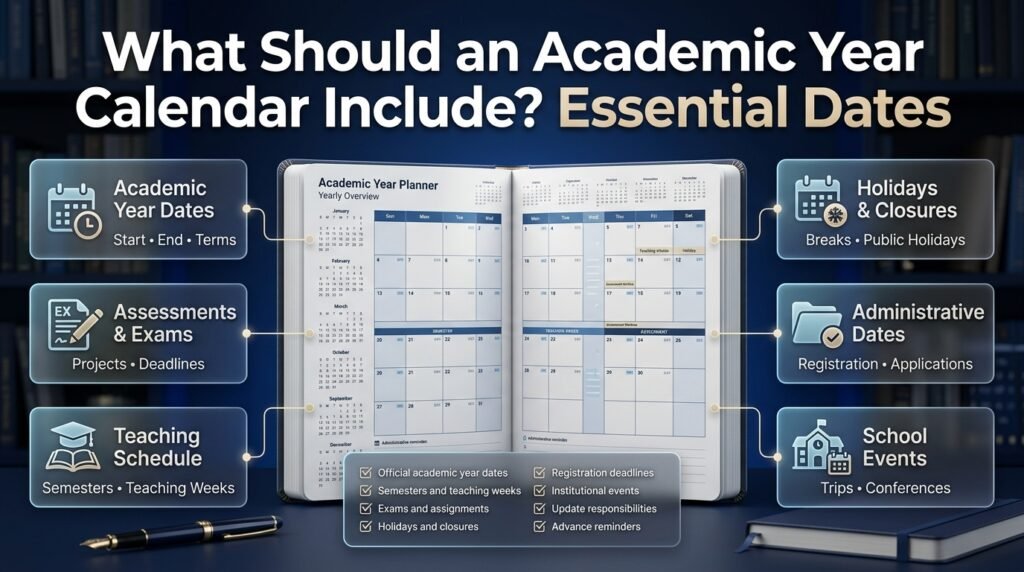
An effective academic year calendar should include the dates that influence teaching, learning, administration, and institutional activities. At a minimum, record the academic year start and end dates, term boundaries, holidays, examination periods, major deadlines, and important events.
The exact details depend on the institution’s structure, location, and educational requirements.
Academic Year Start and End Dates
Begin with the official first and last days of the academic year.
These dates establish the boundaries for all other activities. Once they’re confirmed, add the beginning and ending dates of each semester, term, quarter, or other academic period.
Avoid estimating dates from a previous year. Schools and universities may change their schedules because of policy updates, public holidays, or operational requirements.
Semester and Term Dates
Term dates help users understand how the year is divided into manageable academic periods.
For example, an institution may use two semesters, while another may divide the year into three terms. The calendar should reflect the actual structure rather than forcing every institution into the same format.
For each term, consider recording:
- First and last teaching days
- Orientation or induction periods
- Midterm assessment windows
- Revision periods
- Final examination dates
- Results publication dates
- Term breaks
This structure makes it easier to plan lessons, assignments, and personal study schedules around the institution’s actual teaching cycle.
Examination and Assignment Deadlines
Assessment dates deserve a prominent place because they directly affect preparation time and workload.
Include major examinations, project submissions, coursework deadlines, practical assessments, presentations, and other important evaluation milestones.
For large assignments, record preparation stages rather than only the final submission date. A research project, for example, may need separate dates for topic approval, research, drafting, feedback, editing, and submission.
These intermediate milestones make a difficult project easier to manage.
Holidays and Institutional Closures
Include public holidays, school breaks, university closures, and scheduled non-instructional days.
Depending on the institution, this may also involve staff training days, professional development sessions, or days when buildings are unavailable for normal teaching.
Always distinguish confirmed holidays from tentative dates. Religious holidays and other observances may require verification against relevant official announcements.
Registration and Administrative Deadlines
Administrative dates can be just as important as examinations.
Consider including:
- Student enrollment deadlines
- Course registration periods
- Subject selection dates
- Scholarship applications
- Tuition payment deadlines, where relevant
- Withdrawal or course-change deadlines
- Report card preparation
- Graduation applications
- Graduation ceremonies
These dates often require action well before the deadline, so reminders should allow sufficient preparation time.
School Events and Extracurricular Activities
Major events should also appear when they affect student attendance, staff availability, or the use of institutional facilities.
Examples include sports days, science fairs, educational trips, parent-teacher conferences, career guidance sessions, academic competitions, and student orientation programs.
Not every club meeting needs to appear on the yearly overview. Keep the main calendar focused on important events and place smaller activities in a separate group or weekly schedule.
A Practical Academic Calendar Checklist
Use this checklist to confirm that the essential parts of your calendar are ready before sharing it.
Academic calendar readiness
0/8 completeConfirm official academic year datesAdd semesters, terms, and teaching weeksRecord examinations and major assignmentsVerify holidays and institutional closuresInclude registration and administrative deadlinesAdd important school and university eventsIdentify the person responsible for updatesSet reminders for deadlines that need advance action
Reset checklist
How to Create an Academic Year Calendar Planner Step by Step
The most reliable way to create an academic calendar is to build it in stages. First confirm the dates, then organize the academic structure, add assessments and events, choose the right format, and establish a process for sharing and maintaining the finished calendar.
Step 1: Define the Academic Year Structure
Start by confirming the academic year and determining how the institution divides it.
Identify whether the schedule uses semesters, trimesters, quarters, or terms. Then establish the beginning and ending dates of each period, including any breaks between them.
Why it matters: The structure determines how much teaching time is available and where assessments, revision sessions, and administrative deadlines can fit.
Professional advice: Use an approved academic schedule rather than estimating dates from memory.
Common mistake: Adding examination dates before confirming the term structure can create unnecessary revisions later.
Step 2: Gather Information From Reliable Sources
Collect the official information required to build the calendar.
Depending on the institution, this may include an academic handbook, an approved school calendar, examination schedules, holiday announcements, registration information, and event plans.
Keep track of where each date came from and whether it has been confirmed.
| Calendar item | Information source | Status |
|---|---|---|
| First day of classes | Approved academic schedule | Confirmed |
| Midterm examinations | Examination department | Confirmed |
| Public holiday | Official announcement | Awaiting confirmation |
| Annual academic exhibition | School administration | Tentative |
This simple record helps prevent unverified dates from being treated as final.
Step 3: Build the Annual Overview
Create a yearly view that shows the most important milestones.
Start with the academic year boundaries, term dates, holidays, examination periods, and major institutional events. Once those are in place, add other deadlines that influence the schedule.
Keep the annual overview easy to scan. Long explanations and small daily tasks belong in separate planning views.
A useful structure might look like this:
Academic year overview
- August: Orientation and academic preparation
- September: Classes begin
- October: Teaching and progress assessments
- November: Coursework deadlines
- December: Examinations or scheduled break
- January: New term or semester
- February–March: Teaching and assessments
- April: Revision or spring break, where applicable
- May–June: Final assessments and academic completion
This is only an illustrative example. Actual months, term dates, and holidays vary by location and institution.
Step 4: Add Assessments and Major Deadlines
Once the annual structure is clear, enter examination dates and major assignments.
Then work backward from each deadline to determine when preparation should begin.
For example, a substantial written assignment might use the following schedule:
| Milestone | Example timing |
|---|---|
| Confirm the topic | Four weeks before submission |
| Complete research | Three weeks before submission |
| Prepare the first draft | Two weeks before submission |
| Edit and review | One week before submission |
| Submit the final assignment | Official deadline |
These intervals are examples rather than fixed rules. A short classroom task may require only a few days, while a thesis or complex project may need months of preparation.
Why it matters: Recording only the final deadline tells you when the work must be finished, not how to complete it on time.
Expert tip: Compare major assessment dates across subjects or departments before finalizing the schedule. This can reveal workload conflicts while there’s still time to make adjustments.
Step 5: Include Holidays and Realistic Buffer Time
Don’t assume every scheduled week will be available for uninterrupted academic work.
Public holidays, staff training, school events, illness, weather disruptions, and unexpected administrative requirements may reduce the time available for teaching or studying.
Leave room for these interruptions when planning the curriculum or personal workload.
For example, if a teacher has 10 weeks to complete a unit, the schedule should include time for practice, feedback, and review instead of allocating every available lesson to new material.
Step 6: Choose the Right Planning Format
Choose a format that matches the complexity of your calendar and the needs of the people using it.
A paper calendar may be enough for a student who needs a visual reminder of examinations. A spreadsheet may work better for a department coordinating numerous events. A shared digital calendar can be more practical when dates change frequently.
Before deciding, consider:
- How many people need access?
- How often will dates change?
- Are reminders necessary?
- Does the calendar need to be printed?
- Who is allowed to edit it?
- Is a record of changes important?
- Will users need access from mobile devices?
For more complex educational scheduling, academic planning and scheduling tools can help you explore approaches to organizing academic responsibilities in a more structured way.
Step 7: Share the Calendar With the Appropriate Users
A calendar becomes useful when people can find and understand the information they need.
Students may need examinations and assignment deadlines. Parents may need holidays, parent meetings, and important school events. Teachers need teaching weeks and assessment schedules, while administrators need a wider operational view.
You can maintain a master calendar and create separate views for different groups.
However, make sure sharing permissions are appropriate. A general school calendar shouldn’t expose confidential student information, private staff appointments, or restricted examination material.
Step 8: Establish a Regular Review Process
An academic calendar should be reviewed throughout the year.
Check it before each term, review upcoming dates monthly, and update it whenever an official change occurs.
When an event moves, record the revised date, the reason for the change, and who approved it. Notify affected users rather than assuming they’ll notice the update.
This process reduces confusion and helps everyone work from the same information.
What Is the Best Format for an Academic Year Calendar Planner?
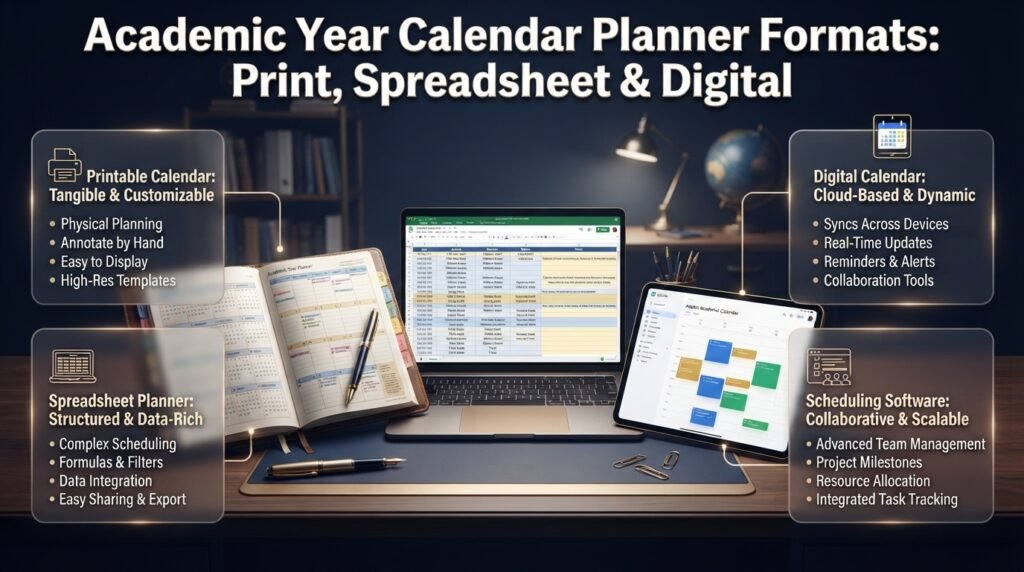
The best academic year calendar planner format depends on how many people will use it, how frequently dates change, and how much detail the schedule requires. A printable calendar is convenient for quick reference, a spreadsheet provides flexibility, and a digital calendar makes sharing and reminders easier.
Printable Academic Year Calendar
A printable planner is a practical choice for students, teachers, and families who prefer to see important dates on paper.
It can be placed on a study desk, classroom noticeboard, or office wall. A full-year printable calendar provides a quick overview, while separate monthly pages offer more space for deadlines and event notes.
Advantages:
- Easy to access without opening an application.
- Convenient for classroom and home use.
- Simple to personalize with handwritten notes.
- Useful for people who prefer visual reminders.
Limitations:
- Changes must be written in manually or printed again.
- Sharing updates with several users can be difficult.
- Older copies may remain in circulation after dates change.
A printable calendar works best when the schedule is relatively stable and users need a clear overview rather than frequent collaborative editing.
Spreadsheet Academic Calendar
A spreadsheet is useful when you need more control over event details, categories, deadlines, and responsibilities.
You can organize events into columns and sort them by date, department, academic term, or status. Conditional formatting can highlight examinations, holidays, and approaching deadlines.
A basic spreadsheet might contain these columns:
| Date | Event | Category | Responsible person | Status |
|---|---|---|---|---|
| September 5 | First day of classes | Academic | Administration | Confirmed |
| October 12 | Project submission | Assessment | Subject teacher | Confirmed |
| November 20 | Parent meeting | School event | Class coordinator | Tentative |
These dates are illustrative and should be replaced with the institution’s actual schedule.
The main challenge is version control. If several people download the spreadsheet and edit separate copies, different versions can quickly become inconsistent.
To prevent this, maintain one master file, limit editing permissions, and make sure everyone knows where to find the latest version.
Digital Academic Calendar
A digital calendar is particularly useful when users need notifications, shared access, and quick updates.
It can help students receive reminders before assignment deadlines, allow parents to view school events, and enable teachers to coordinate recurring activities.
However, digital planning should remain simple. Too many notifications can become distracting, and users without reliable device access may struggle to keep up.
Choose a system that is easy to access, offers appropriate sharing controls, and supports the way your institution already works.
Academic Scheduling Software
Larger schools, colleges, and universities may need more than a standard calendar. Their schedules can involve several departments, different teaching groups, room availability, instructor assignments, and competing academic requirements.
A specialized scheduling system may help coordinate these activities and reduce manual work.
Before choosing one, identify the problem you need to solve. If you only need to record holidays and examination dates, a spreadsheet may be sufficient. If you’re coordinating complicated schedules across departments, a more structured system may be worth evaluating.
The objective is to select a tool that simplifies planning rather than adding unnecessary administrative complexity.
How Can Students Use an Academic Year Calendar to Improve Their Grades?
Students can use an academic year calendar to organize study sessions, prepare for examinations, and complete assignments before their deadlines. The key is to turn important dates into smaller, scheduled actions that make consistent progress possible.
Plan Backward From Examination Dates
Start with the examination date and calculate when preparation should begin.
For example, if an examination is six weeks away, the student can divide the available time into topic review, practice questions, mock tests, and final revision.
This creates a clear preparation plan instead of leaving everything until the final few days.
The schedule should also reflect the difficulty of each subject. A student who struggles with mathematics may need more practice time than one who already understands the material.
Schedule Study Sessions Around Existing Commitments
Students often create ambitious study plans without considering classes, travel, family responsibilities, or other activities.
An effective planner accounts for these commitments before allocating study time.
For example, a student with classes throughout the day may schedule shorter evening sessions on weekdays and longer review periods during the weekend. Another student may prefer studying early in the morning.
The best schedule is one the student can maintain consistently.
Break Large Assignments Into Smaller Tasks
A major project can feel difficult because the final deadline hides the amount of work involved.
Instead of recording only “submit research project,” create smaller milestones:
- Understand the assignment requirements.
- Choose a topic and confirm the scope.
- Gather and organize research.
- Create an outline.
- Write the first draft.
- Review and improve the work.
- Submit before the official deadline.
Each milestone should have a realistic completion date.
This approach makes progress easier to measure and helps students identify delays while there’s still time to recover.
Review Upcoming Work Every Week
A yearly calendar provides direction, but weekly reviews turn that direction into action.
At the beginning or end of each week, review upcoming deadlines and identify the three most important academic priorities.
Check whether assignments are progressing, whether examination preparation has started, and whether new commitments have appeared.
📌 Quick Tip: Schedule a weekly review of the next 14 days. This provides enough visibility to prepare for approaching deadlines without making daily planning unnecessarily complicated.
How Can Teachers and Administrators Use an Academic Year Calendar?
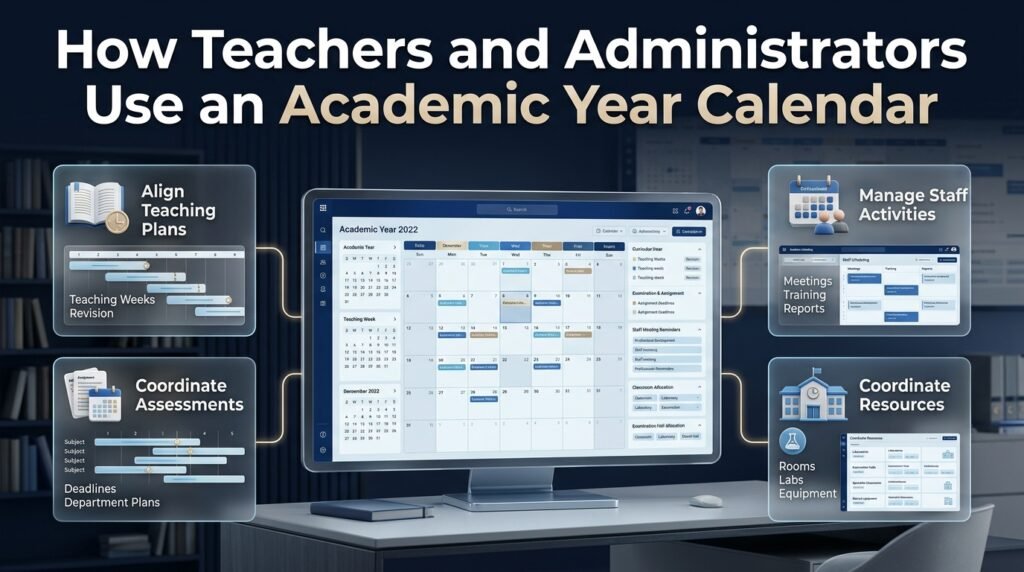
Teachers and administrators can use an academic year calendar to coordinate curriculum delivery, assessments, staff activities, and institutional events. A shared schedule improves visibility and helps teams identify potential conflicts before they affect students or daily operations.
Align Teaching Plans With Available Weeks
Teachers should map curriculum topics against the actual teaching time available in each term.
Consider a course with 10 weeks allocated for instruction. If holidays and scheduled activities reduce the number of available lessons, the original plan may need adjustment.
Teachers can identify essential learning outcomes, allocate time for difficult topics, and reserve sessions for revision and assessment.
This creates a more realistic plan than simply dividing the syllabus equally across the calendar.
Coordinate Assessments Across Departments
Students may have several subjects with demanding deadlines at the same time.
A shared assessment calendar allows departments to compare their schedules and identify weeks that may become overloaded.
For example, if three departments schedule major projects for the same week, teachers can discuss whether one flexible deadline could move without affecting curriculum requirements.
The aim isn’t to eliminate every busy period. It’s to avoid preventable conflicts and provide students with reasonable preparation time.
Manage Staff Meetings and Professional Development
Teachers need time for lesson preparation, marking, collaboration, and training.
Administrators can record staff development sessions, reporting deadlines, parent meetings, and departmental reviews in the calendar.
This helps avoid scheduling important activities during periods when teachers are already managing examinations or completing report cards.
Coordinate Facilities and Resources
Some academic activities require laboratories, specialist classrooms, examination halls, or shared equipment.
A calendar that records these commitments makes it easier to identify resource conflicts before the event.
For example, a science examination and a practical workshop may both require the same laboratory. Identifying the conflict early gives the school time to change the room or adjust the schedule.
For institutions that want to improve their wider scheduling process, academic calendar planning is a relevant topic to explore when developing a more organized approach.
How Can Parents Use an Academic Year Calendar Planner?
Parents can use an academic year calendar to coordinate school responsibilities, family activities, homework routines, and important educational milestones. It provides a shared reference that helps the family prepare for upcoming events rather than responding to them at the last minute.
Track Important School Dates
Record school openings, holidays, parent-teacher meetings, examination periods, project deadlines, and educational trips.
If several children attend different schools, use separate labels for each child while maintaining one family overview.
This makes it easier to identify dates that overlap and arrange transportation or supervision in advance.
Support Homework and Revision
Parents don’t need to control every hour of a child’s schedule. Instead, they can use the calendar to help children understand upcoming responsibilities.
For example, a child with a science project due in two weeks can divide the work into research, preparation, completion, and review.
Parents can check progress without turning the entire process into a daily source of pressure.
Balance Education With Rest and Activities
A useful calendar includes time for extracurricular activities, family commitments, and rest.
If a child has several examinations during one week, the family may decide to reduce optional activities temporarily and create more time for revision.
However, avoid treating every free hour as study time. Rest and recreation are important parts of a sustainable routine.
Establish a Family Review Routine
A short weekly review can help the family discuss upcoming commitments.
Look at the next week, confirm any special arrangements, prepare necessary materials, and identify deadlines that need attention.
This simple routine helps children develop planning skills gradually while allowing parents to provide support when needed.
How Do You Create a Realistic Academic Year Calendar?
A realistic academic calendar reflects the time and resources actually available, rather than assuming every week will run perfectly. Start with fixed dates, calculate the available teaching time, add assessments and events, and leave flexibility for changes.
Calculate Available Instructional Time
Calendar weeks and teaching weeks aren’t always the same.
A week may contain a public holiday, staff development, an examination, or another activity that reduces normal classroom instruction.
Suppose a term contains 12 calendar weeks, but one week includes two non-instructional days. Teachers should consider the remaining lessons when deciding how much new material can reasonably be covered.
This is especially important for subjects with practical activities, complex projects, or mandatory curriculum requirements.
Separate Fixed and Flexible Activities
Not every calendar entry has the same level of flexibility.
Fixed dates may include approved examination windows, registration deadlines, and required institutional closures.
Flexible activities may include internal review sessions, optional workshops, or some classroom projects.
When unexpected changes occur, review the flexible activities first where possible. This can help protect essential deadlines and minimize disruption.
Create a Simple Contingency Plan
Unexpected interruptions are part of academic life.
A teacher may need to postpone a lesson, a school may close temporarily, or an examination may require rescheduling.
Decide in advance how changes will be handled. Identify who approves revisions, how affected people are notified, and where the updated schedule will appear.
A clear process prevents small changes from creating widespread confusion.
What Are the Most Common Academic Calendar Planning Mistakes?
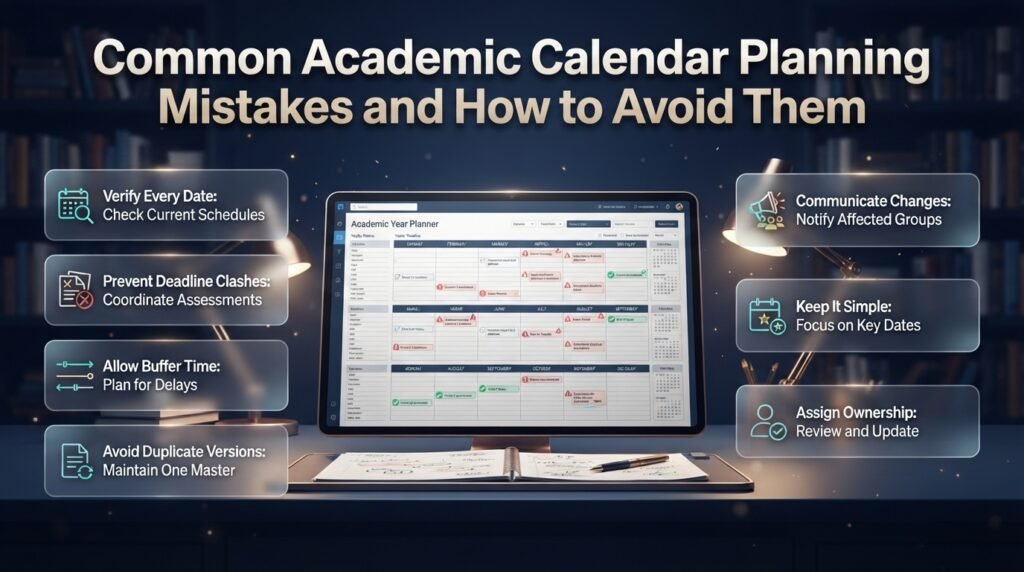
The most common planning mistakes include using unverified dates, underestimating workloads, creating overly complicated calendars, and failing to communicate changes. These problems can make even a well-designed schedule unreliable.
Mistake 1: Copying an Old Calendar Without Verification
This happens when planners assume the new academic year will follow the previous year’s dates.
The result can be incorrect holiday dates, outdated enrollment deadlines, and examination conflicts.
How to avoid it: Verify each important date against the current approved schedule. Mark uncertain dates as tentative until confirmation.
Mistake 2: Ignoring Assessment Overlaps
Teachers may schedule assessments independently without considering the combined workload across subjects.
Students then face several demanding deadlines within a short period.
How to avoid it: Review major assessment dates together and discuss reasonable adjustments before the calendar is finalized.
Mistake 3: Filling Every Available Day
An overly ambitious calendar leaves no room for unexpected delays, revision, or additional support.
Even a minor disruption can force multiple activities to move.
How to avoid it: Include realistic buffers, distinguish essential activities from optional ones, and avoid scheduling every task at maximum capacity.
Mistake 4: Maintaining Multiple Conflicting Versions
Separate spreadsheets, printed copies, and old messages may contain different dates.
This often happens when updates are made without a clear publishing process.
How to avoid it: Maintain one official version and clearly identify where users should check for the latest schedule.
Mistake 5: Forgetting to Notify People About Changes
Updating the calendar alone may not be enough. Users may not notice a revised examination date or a changed meeting time.
How to avoid it: Notify affected groups directly and update the official calendar promptly.
Mistake 6: Adding Too Much Detail to the Annual View
Including every small task makes it harder to identify major milestones.
How to avoid it: Keep the yearly overview focused on important dates and use separate weekly or departmental schedules for smaller activities.
Mistake 7: Failing to Assign Responsibility
If no one is responsible for maintaining the calendar, updates may be delayed or overlooked.
How to avoid it: Assign an owner who verifies dates, manages approved changes, and ensures users receive important updates.
Expert Tips for Maintaining an Effective Academic Calendar
The best academic calendars combine accurate information with a routine that people can follow. A simple, well-maintained planner is usually more useful than a complicated system that nobody updates.
Keep the Annual View Focused
Use the yearly calendar for major dates, term boundaries, holidays, and examinations.
Detailed task lists, lesson plans, and daily reminders should be stored in more appropriate views.
This makes the annual schedule easier to understand without removing access to important details.
Use Consistent Categories
Choose a small set of categories, such as examinations, holidays, administrative deadlines, and school events.
Use the same labels throughout the calendar. If colors are used, combine them with text so information remains accessible to users who cannot distinguish every color.
Assign an Owner to Every Major Event
For important institutional activities, identify the person responsible for confirming the date and coordinating arrangements.
For student assignments, identify the next action and its deadline.
This helps ensure that calendar entries lead to practical action rather than serving as passive reminders.
Use Notifications Carefully
Set reminders according to how much preparation an event requires.
A registration deadline may need advance reminders, while a routine lesson may not need repeated alerts.
Avoid sending unnecessary notifications that train users to ignore important messages.
Review the Calendar Before Every Term
Before each term begins, check teaching plans, assessment dates, holidays, room availability, and major events.
Ask whether students have enough preparation time and whether teachers have adequate time for marking and feedback.
A short review can reveal conflicts before they become difficult to resolve.
Make Accessibility a Priority
Use readable text, clear labels, appropriate contrast, and consistent date formats.
If the calendar is shared digitally, ensure that intended users can access it without unnecessary technical barriers. Provide a printable version when that helps students, parents, or staff.
Protect Confidential Information
A public academic calendar should contain general dates, not private student records or confidential examination material.
Use appropriate permissions for restricted information and make sure only authorized people can edit the master schedule.
How Often Should an Academic Year Calendar Be Updated?
An academic calendar should be reviewed before the academic year begins, checked before each term, and updated whenever an official date changes. Monthly and weekly reviews help identify approaching deadlines and emerging conflicts before they become urgent.
A practical review schedule may look like this:
| Review period | Main responsibility |
|---|---|
| Before the academic year | Verify all official dates |
| Before each term | Review teaching and assessment plans |
| Monthly | Check upcoming events and conflicts |
| Weekly | Review near-term tasks and changes |
| After a major revision | Update the calendar and notify affected users |
The exact frequency depends on the institution. A small learning program may need fewer formal reviews than a university with several departments and campuses.
The important point is to make calendar maintenance part of the normal planning process rather than leaving it until a problem appears.
How Do You Create an Effective Academic Year Calendar Planner?
Creating an effective academic year calendar planner starts with identifying the official dates that shape the academic year. These include the first and last days of classes, semester or term dates, examination periods, school holidays, assignment deadlines, and important institutional events. Once these dates are confirmed, organize them into a clear yearly overview and add monthly or weekly details where necessary.
The most useful approach is to plan around fixed commitments first and then schedule flexible activities around them. For example, students can work backward from examination dates to schedule revision sessions, while teachers can distribute assignments across the term to avoid unnecessary workload conflicts. Schools and universities should also establish a process for verifying dates and communicating changes.
Important steps to follow:
Confirm the academic year dates using official institutional information.
Add examinations, assignments, holidays, and registration deadlines.
Choose a suitable format, such as a printable calendar, spreadsheet, or digital planner.
Set reminders for deadlines that require advance preparation.
Review the calendar regularly and update it whenever approved dates change.
A well-organized planner should make upcoming responsibilities easier to understand, not create another complicated system to manage.
What Should an Academic Year Calendar Planner Include?
An academic year calendar planner should include the dates and activities that directly affect teaching, learning, and educational administration. At a minimum, it should show the academic year structure, term dates, holidays, examinations, assignment deadlines, and major school or university events. The exact details depend on whether the calendar is intended for students, teachers, parents, or administrators.
For students, the planner should focus on coursework, project milestones, examination preparation, and submission dates. Teachers may need teaching weeks, assessment schedules, grading periods, staff development days, and parent-teacher meetings. Administrators often require a broader view that includes enrollment, institutional closures, room availability, and important academic events.
Essential information to include:
Academic year start and end dates.
Semester, trimester, or term schedules.
Examination dates and major assignment deadlines.
Public holidays and institutional breaks.
Registration, enrollment, and administrative deadlines.
School activities, educational trips, and parent meetings.
Reminders for important tasks and upcoming events.
The goal is to include enough information to support effective planning without overcrowding the calendar. Major milestones should remain visible, while smaller daily tasks can be managed through separate weekly schedules.
Which Is Better for Academic Planning: A Digital Calendar or a Printable Planner?
The best choice depends on how the calendar will be used, how often dates change, and whether several people need access. A digital academic calendar is particularly useful for sharing schedules, setting reminders, and updating events quickly. A printable planner, on the other hand, provides a simple visual overview that can be displayed on a desk, classroom wall, or family noticeboard.
Digital calendars work well for students managing multiple subjects, teachers coordinating assessments, and institutions that regularly communicate schedule changes. Printable calendars are useful for people who prefer handwritten notes or want to see important dates without opening an application. Both formats can be effective when the information remains accurate and easy to understand.
Choose a digital calendar when:
You need automatic reminders and recurring events.
Several people must access the same schedule.
Dates change frequently.
You want to view the calendar across different devices.
Choose a printable planner when:
You prefer writing notes by hand.
You want a quick yearly or monthly overview.
You need a calendar that can be displayed in a visible location.
You don’t require frequent collaborative updates.
For many students and educational institutions, a combination works best: maintain an official digital calendar for accurate updates and use a printed overview for everyday reference.
How Can Students Use an Academic Year Calendar Planner to Manage Exams and Assignments?
Students can use an academic year calendar planner to organize their workload well before examinations and assignment deadlines arrive. Rather than recording only the final submission date, they should divide major tasks into smaller stages and assign realistic dates to each one. This makes academic responsibilities easier to manage and reduces the pressure of completing everything at the last minute.
For example, a student with a research assignment due in four weeks can schedule topic selection during the first week, research during the second, drafting during the third, and editing before submission. Examination preparation can follow a similar approach, with separate sessions for reviewing topics, answering practice questions, and addressing difficult concepts.
Practical ways to manage academic work:
Record all major examination and assignment dates at the beginning of the term.
Break large projects into smaller, manageable tasks.
Schedule regular study sessions instead of relying on last-minute revision.
Identify weeks when several subjects have demanding deadlines.
Review progress weekly and adjust the schedule when necessary.
Leave some flexibility for unexpected assignments or personal commitments.
A calendar cannot replace consistent effort, but it can help students use their available time more effectively. The key is to create a realistic plan that supports steady progress rather than filling every available hour with work.
How Often Should an Academic Year Calendar Planner Be Updated?
An academic year calendar planner should be reviewed before the academic year begins, checked before each term, and updated whenever an official date or important event changes. Regular reviews help ensure that students, teachers, parents, and administrators continue working from accurate information throughout the year.
A yearly review establishes the overall structure, while monthly checks help identify upcoming deadlines and scheduling conflicts. Weekly reviews are useful for students and teachers who need to manage immediate responsibilities. If an examination, holiday, or school event changes unexpectedly, the calendar should be updated promptly and affected users should be informed.
A practical review routine includes:
Before the academic year: Confirm term dates, holidays, examinations, and enrollment deadlines.
Before each term: Check teaching plans, assessments, and major events.
At the beginning of each month: Review approaching deadlines and identify potential conflicts.
Every week: Check upcoming tasks and preparation requirements.
Whenever a change occurs: Update the official calendar and notify the relevant people.
Assigning responsibility for calendar maintenance is particularly important in schools and universities. Without a clear owner, changes may be delayed or communicated inconsistently. A regularly maintained planner remains a dependable reference and helps prevent avoidable scheduling problems.
Conclusion: Make Every Academic Term More Organized and Productive
An effective academic year calendar planner is more than a schedule of important dates. It is a practical tool that helps students, teachers, parents, and academic administrators organize responsibilities, prepare for deadlines, and maintain a clearer view of the entire academic year. By recording semester dates, examination periods, assignment deadlines, holidays, school events, and personal commitments in one place, it becomes easier to manage competing priorities without unnecessary stress.
The key to successful academic planning is choosing a calendar system that fits your routine and keeping it updated throughout the year. A digital planner offers reminders, flexible scheduling, and convenient access across devices, while a printable planner provides a simple visual overview that can be displayed on a desk or wall. Whichever option you choose, consistency matters more than complexity.
For better results, review your schedule weekly, prepare for major deadlines in advance, and leave room for unexpected changes. You can also explore academic planning and scheduling tools and learn more about academic calendar planning to develop a more structured approach to managing educational responsibilities.
Ultimately, the best academic year calendar planner is one that turns important dates into manageable actions. With thoughtful planning, regular updates, and realistic goals, you can improve time management, reduce last-minute pressure, and approach each semester with greater confidence. Start organizing your academic year today with RTI Scheduler and build a planning routine that supports consistent progress throughout the year.