
Introduction
Academic Deadline Management | Missing an academic deadline can create problems that affect much more than one assignment. A student who forgets a project submission date may lose marks, while a teacher who overlooks an assessment deadline may struggle to complete grading on time. When examinations, coursework, presentations, and administrative responsibilities overlap, even hardworking students and experienced educators can find it difficult to stay organized.
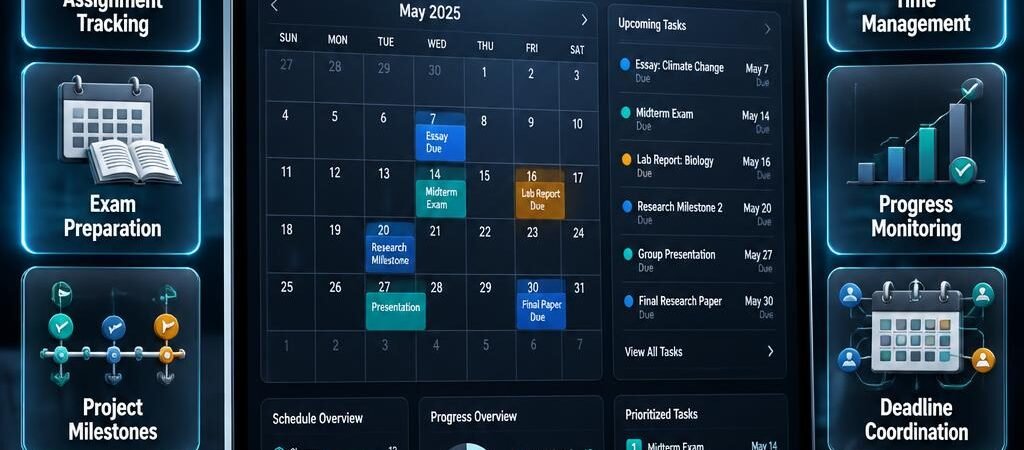
Academic deadline management is the process of recording, organizing, prioritizing, and completing academic responsibilities within their required timeframes. It helps students plan assignments, prepare for examinations, track research projects, and manage important academic commitments without leaving everything until the last minute.
For students, the challenge is often balancing several subjects with different expectations. Teachers must coordinate lesson preparation, assessments, grading, and communication. Academic administrators face an additional challenge: ensuring that deadlines across departments remain consistent and manageable.
A reliable system can make these responsibilities easier to handle. Instead of relying on memory or reacting to the nearest deadline, individuals can use structured planning to understand what needs attention, how much time is available, and which task should come next.
Resources available through RTI Scheduler can complement a broader academic planning process by helping users organize related educational schedules.
This guide explains how to create a practical academic deadline management system, choose suitable planning tools, prioritize overlapping assignments, prevent common mistakes, and coordinate deadlines across an academic term. It also includes examples, checklists, and actionable recommendations for students, teachers, and educational institutions.
What Is Academic Deadline Management?
Academic deadline management is a structured method for ensuring that educational tasks are completed by their required dates. It combines calendar planning, workload estimation, task prioritization, progress tracking, and timely communication to help people meet academic obligations consistently.
A deadline is the date or time by which a particular responsibility must be completed. Deadline management goes further than simply recording that date. It considers the work required before the deadline, the resources needed, the consequences of delays, and the steps necessary to complete the task successfully.
Academic deadlines commonly include:
- Assignment and coursework submission dates.
- Homework, quizzes, and classroom assessment dates.
- Research papers, dissertations, and project milestones.
- Examination registration and examination dates.
- Presentations and group project deliverables.
- Course enrollment and semester registration periods.
- Scholarship and academic application deadlines.
- Grade submission and curriculum review dates.
- Academic reports and departmental documentation.
- Final project approvals and graduation requirements.
For example, a university student may have a research paper due on Monday, a mathematics test on Wednesday, and a group presentation on Friday. If the student focuses only on whichever task feels most urgent, preparation for the other two responsibilities may suffer.
A deadline management system makes these commitments visible together. The student can divide the available time between research, revision, and presentation preparation instead of discovering the workload problem a day before submission.
How Is Deadline Management Different From Time Management?
Time management focuses on how a person uses available hours, while deadline management focuses on completing specific responsibilities by required dates. The two approaches work together: time management allocates working periods, and deadline management ensures that those periods support the right outcomes.
For instance, someone may have excellent daily routines but still miss an assignment deadline because the task was never added to their calendar.
Similarly, recording every deadline does not guarantee success if there is no realistic plan for completing the work.
An effective academic system connects three elements:
- The deadline: When must the work be finished?
- The workload: How much work remains?
- The action plan: What should happen today, tomorrow, and before submission?
When these elements are connected, students and educators can make better decisions about their time.
Why Is Academic Deadline Management Important?
Academic deadline management improves organization, encourages earlier preparation, and reduces avoidable last-minute pressure. It also helps people identify workload conflicts before they interfere with academic performance.
Its main benefits include:
- Improved work quality: Students have time to research, revise, and correct mistakes.
- Fewer missed deadlines: Written records and reminders reduce dependence on memory.
- Better prioritization: Important tasks receive attention before they become urgent.
- Reduced academic stress: A visible plan makes responsibilities easier to understand.
- More reliable preparation: Examinations and projects can be approached in stages.
- Greater accountability: Progress can be measured instead of assumed.
- Improved communication: Students and educators can identify scheduling problems earlier.
- Better use of available time: Work sessions are allocated according to actual requirements.
Deadline management cannot prevent every problem. Illness, technical failures, unexpected family responsibilities, and institutional changes may still affect a schedule. However, a well-maintained plan makes it easier to recognize the problem, revise priorities, and protect the most important commitments.
Who Needs an Academic Deadline Management System?
Academic deadline management is useful for anyone who must complete, supervise, or coordinate educational responsibilities. The details of the system should reflect the user’s role, workload, and level of responsibility.
Students Managing Multiple Subjects
Students often receive deadlines from several teachers, departments, or online learning platforms. Each subject may have different assessment rules, submission methods, and preparation requirements.
A student-focused deadline tracker should show assignment dates, examination schedules, estimated work time, and progress status.
For example, a student taking six subjects might record the due date of each assignment and divide major projects into smaller preparation stages. This makes it easier to recognize when two demanding tasks require attention during the same week.
Students should also include revision sessions and personal commitments when planning their workload. A schedule that accounts for every assignment but ignores existing classes and responsibilities is unlikely to remain realistic.
Teachers and Instructors
Teachers manage lesson preparation, classroom activities, assessments, marking, student feedback, and administrative tasks. Their deadlines may involve several classes and different groups of learners.
A teacher can use a central planning system to track when assignments are released, when students must submit them, when marking should be completed, and when grades must be recorded.
This is especially useful when a teacher works with several classes that follow different schedules. Clear records reduce the risk of forgetting an important task or allowing marking responsibilities to accumulate unexpectedly.
Academic Administrators
Academic administrators coordinate institutional dates, departmental requirements, registration periods, examinations, and academic reporting.
Their planning responsibilities often involve multiple people and interconnected deadlines. For example, an examination timetable may depend on confirmed course information, room availability, staff assignments, and institutional calendar dates.
Administrators benefit from systems that identify responsible individuals, record approved dates, and provide a clear process for communicating changes.
They may also use Academic Planning and Scheduling Tools as part of a broader approach to organizing academic activities.
Researchers and Postgraduate Students
Research projects often involve extended timelines rather than one final submission date. A dissertation may require topic approval, literature review, research design, data collection, analysis, chapter writing, and final review.
Each stage has different requirements, and some tasks cannot begin until earlier work is completed.
A researcher should therefore track both the final deadline and the milestones that lead to it. This makes it easier to identify delays early and revise the schedule without losing sight of the final objective.
Parents, Tutors, and Academic Support Teams
Parents and tutors may help students organize schoolwork, examination preparation, and project deadlines. Their support is most effective when it helps learners develop independent planning habits.
For younger students, a weekly checklist and a visible calendar may be enough. Older students may benefit from maintaining their own digital tracker and reviewing it with a tutor when they need assistance.
The goal is not to monitor every minute of a learner’s day. It is to help the learner understand responsibilities, plan ahead, and take ownership of completing the work.
How to Create an Effective Academic Deadline Management System

A reliable system starts with accurate information and turns that information into manageable actions. You do not need complicated software to begin; a calendar and a simple task list can provide a strong foundation.
Step 1: Collect Every Academic Deadline
Begin by gathering confirmed deadlines from course outlines, assignment instructions, learning management systems, academic notices, and official institutional calendars.
Avoid relying on memory or assuming that every date appears in one location.
For each task, record the following information:
| Field | Information to record |
|---|---|
| Task name | Assignment, examination, project, or administrative requirement |
| Official due date | Confirmed date of completion or submission |
| Due time | Exact deadline time, including the relevant time zone when necessary |
| Course or department | The subject or academic area responsible |
| Priority | High, medium, or low |
| Estimated effort | Approximate working hours or sessions required |
| Status | Not started, in progress, ready for review, or completed |
| Next action | The immediate step needed to make progress |
| Submission method | Online portal, classroom submission, email, or another approved method |
For example, recording “Biology report due November 18” is less useful than recording the submission time, research requirements, estimated writing time, and next preparation step.
The additional details help you move from remembering a deadline to managing the work behind it.
Step 2: Verify Dates Before Building the Schedule
A deadline tracker is only as reliable as the information entered into it.
Check whether the date comes from an official source, whether the time is correct, and whether the instructions specify any special submission requirements.
If two sources show different dates, do not simply choose the more convenient one. Confirm the correct deadline with the relevant teacher, department, or administrator.
This step is particularly important when working with revised examination schedules, holidays, or course announcements.
Expert tip: Record a date as confirmed only after checking the authoritative source. If a date is provisional, label it clearly so that it is not mistaken for a final commitment.
Step 3: Put All Confirmed Deadlines in One Central Calendar
Once the dates are collected, place them in one central calendar or tracker.
The purpose is to create a complete overview of upcoming responsibilities. You can still use individual course platforms or departmental systems, but your planning view should help you see how those responsibilities fit together.
Organize tasks into categories such as:
- Coursework and assignments.
- Examinations and assessments.
- Research and long-term projects.
- Administrative requirements.
- Revision and preparation.
- Meetings and group project commitments.
A semester-wide view can help reveal busy periods several weeks before they arrive.
Academic Calendar Planning is a relevant resource for organizing broader academic dates, while an individual student may need a more detailed task tracker for daily work.
How to Organize Assignment Submission Dates With an Academic Calendar
Keeping assignment submission dates organized helps students manage their academic workload and complete tasks without unnecessary last-minute pressure. Teachers and academic coordinators should maintain a clear record of upcoming assignments, subject requirements, submission deadlines, and important project milestones. Students can use this schedule to prioritize tasks, divide larger assignments into manageable steps, and plan their study time around other academic responsibilities. It is also important to coordinate deadlines across different subjects to prevent multiple major submissions from falling on the same day. A well-organized assignment calendar improves time management, supports timely submissions, and keeps everyone informed about important academic dates.
For better assignment planning and deadline management, explore this resource 👉 Assignment Submission Calendar
This resource helps students organize assignment deadlines, track upcoming submissions, manage coursework activities, and maintain a clear academic submission schedule throughout the semester.
Step 4: Prioritize Tasks by Urgency, Importance, and Effort
Not every deadline deserves equal attention at every moment. A task due tomorrow may require immediate action, but a major project due next month may also need to begin now.
Consider three factors when deciding what to do next:
- Urgency: How soon must the task be completed?
- Importance: What is the academic impact of completing it well or submitting it late?
- Effort: How much work remains, and how difficult is that work likely to be?
A simple priority guide can help.
| Priority level | Typical situation | Recommended response |
|---|---|---|
| High | A major assessment is approaching and significant work remains | Schedule focused work immediately |
| Medium | An important project is due in the coming weeks | Assign regular preparation sessions |
| Low | A short, flexible task has a distant deadline | Schedule it without displacing critical work |
Priority should not depend on the due date alone. A research project requiring fifteen hours may deserve attention before a short task that takes ten minutes, even if the short task is due first.
Avoid labeling everything as high priority. If every task receives the same urgency, the system stops helping you decide where to focus.
Step 5: Break Large Assignments Into Smaller Tasks
Large assignments can feel difficult because the final outcome appears too far away or too complicated. Breaking the work into smaller steps creates clear starting points and makes progress easier to measure.
A research paper, for example, may require:
- Understanding the assessment instructions.
- Choosing or confirming the topic.
- Developing the main research question.
- Finding and evaluating reliable sources.
- Creating an outline.
- Writing the first draft.
- Reviewing the argument and evidence.
- Editing language and checking references.
- Preparing the required file or format.
- Submitting the final version and confirming receipt.
Each step should have its own target date when the project is substantial enough to justify one.
For a shorter assignment, fewer milestones may be sufficient. The purpose is to make the work manageable, not to create unnecessary administrative tasks.
Step 6: Estimate the Time Required for Each Task
Accurate workload estimates help prevent overbooking.
Think about the different stages involved rather than guessing the total time based on the assignment’s length. Reading, research, problem-solving, writing, practice, and proofreading may require very different amounts of effort.
For example, a five-page research assignment might require:
| Activity | Estimated time |
|---|---|
| Understanding the instructions and selecting a focus | 30 minutes |
| Research and note-taking | 2 hours |
| Preparing an outline | 45 minutes |
| Writing the draft | 2.5 hours |
| Editing and checking references | 1 hour |
| Final submission checks | 15 minutes |
These estimates are illustrative. A technical report or unfamiliar subject may require much more time.
If you have little experience with a particular task, schedule an initial work session and review your estimate afterward.
Quick tip: Use previous assignments as a reference. Your own experience often provides a more realistic estimate than a general rule about how long academic work should take.
Step 7: Create Internal Deadlines
An internal deadline is a personal target set before the official due date. It gives you time to review your work, fix problems, and handle unexpected interruptions.
For example, if an assignment is due on Friday, you might aim to complete the draft on Tuesday, edit it on Wednesday, and perform the final checks on Thursday.
The amount of buffer time should reflect the task. A short worksheet may need little preparation, while a dissertation chapter or group presentation may require several days of flexibility.
Internal deadlines are most useful when they are realistic. Setting every target unnecessarily early may cause you to ignore the plan, while setting them too close to the official deadline leaves little room for problems.
Step 8: Track Progress and Update the Plan
A deadline management system should show the current state of each task.
Useful status labels include:
- Not started.
- In progress.
- Waiting for information or feedback.
- Ready for review.
- Submitted.
- Completed and confirmed.
Update the status when meaningful progress occurs. If a project falls behind, identify the reason and decide how to recover.
For example, if research takes two days longer than expected, you may need to reduce time spent on optional formatting or move an earlier revision session. You should not simply leave the original schedule unchanged and hope the delay disappears.
Step 9: Review Your System Every Week
Set aside a short period each week to check your deadlines and compare the plan with actual progress.
Ask yourself:
- Which deadlines are approaching?
- Which tasks are behind schedule?
- Which estimates were inaccurate?
- Have any official dates changed?
- What are the most important tasks for the next seven days?
- Where should I leave extra time?
A weekly review prevents small scheduling problems from becoming major ones.
Over time, this process also improves your ability to estimate workload, identify recurring obstacles, and develop a planning system that suits your actual habits.
Best Tools and Methods for Academic Deadline Management
The best deadline management tool is the one that matches your workload and helps you maintain accurate information. A student managing five assignments may need only a calendar and checklist, while a school coordinating multiple classes may require shared schedules, departmental responsibilities, and a formal process for updating dates.
Before choosing a tool, consider how many deadlines you manage, whether other people need access, how often schedules change, and whether you need reminders or progress tracking.
Paper Planners for Simple Academic Workloads
A paper planner is useful for students who prefer writing tasks by hand and want fewer digital distractions.
You can use a weekly spread for immediate assignments and a monthly view for examinations, project deadlines, and important academic events. A separate checklist can record the smaller steps needed to complete major tasks.
The main advantage is simplicity. You do not need an internet connection, software setup, or technical knowledge.
However, paper planners require manual updates. If a teacher changes an examination date, you must correct it wherever it appears. They can also become difficult to manage when you have many courses or collaborate with other students.
Best for: Students with a manageable number of deadlines who prefer a physical planning system.
Spreadsheets for Detailed Deadline Tracking
Spreadsheets are useful when you want more detail than a conventional calendar provides.
You can create columns for task names, courses, due dates, priorities, estimated hours, completion status, and internal milestones. Sorting and filtering can help you identify upcoming work or tasks that have not started.
For example, a student could filter the tracker to show all assignments due within the next seven days. A teacher could filter by class to review marking responsibilities.
Spreadsheets also make it easier to compare planned workloads across weeks. However, reminders and collaborative updates may require additional setup, and inaccurate entries can still cause missed deadlines.
Best for: Students, teachers, and small academic teams who need flexibility and structured records.
Digital Calendars for Time-Based Planning
Digital calendars work well for deadlines tied to specific dates and times. Many calendar applications support notifications, recurring events, shared views, and changes across connected devices.
You can use calendar entries for examination dates, submission deadlines, revision sessions, meetings, and project milestones.
A useful distinction is to record both the final deadline and the time allocated to completing the task. For instance, an assignment due on Thursday might have a separate writing session on Monday and an editing session on Wednesday.
A calendar alone may not provide enough detail to track complex projects. Combining it with a task list can help you manage both dates and work in progress.
Best for: People who need reminders and a clear view of their daily or weekly commitments.
How to Track Important Academic Milestones and Deadlines
Managing academic milestones effectively helps students, teachers, and educational administrators stay on track with important activities throughout the semester. These milestones may include assignment submission dates, examination periods, project completion targets, coursework reviews, registration deadlines, and other academic responsibilities. Start by identifying important upcoming events, assigning realistic target dates, and organizing them according to priority. Setting reminders in advance gives students enough time to prepare, while teachers can monitor progress and communicate important updates more effectively. A structured reminder system reduces the risk of missed deadlines, improves time management, and keeps academic activities running smoothly.
To stay organized and manage important academic reminders, explore this resource 👉 Academic Milestone Reminder Planner
This resource helps organize academic milestones, track important deadlines, manage upcoming responsibilities, and maintain a clear overview of essential academic activities throughout the semester.
Task Management Applications for Complex Projects
Task management applications are particularly helpful when an assignment contains multiple steps or requires collaboration.
A group research project might include individual research tasks, a shared outline, draft reviews, slide preparation, and rehearsal. Each task can have an owner, target date, and status.
This makes it easier to identify which work is complete and which work is holding up the project.
The limitation is that detailed systems can become time-consuming if every small action is recorded. Choose a level of detail that supports the work rather than creating more work.
Best for: Group assignments, research projects, and academic responsibilities involving several people.
Academic Scheduling Resources for Schools and Institutions
Schools and academic institutions often need to coordinate deadlines with lesson schedules, holidays, examinations, and school events.
In these situations, individual task trackers are not always sufficient. Administrators also need to understand how academic dates relate to one another and how changes affect staff and students.
The Academic Holiday Calendar Builder can be relevant when reviewing holidays that affect the academic calendar. The Semester Milestone Calendar is relevant when mapping major academic stages across a term.
These are related planning resources, not substitutes for confirming official institutional deadlines. Before adopting any application for critical work, check its available features, update process, and suitability for your requirements.
How to Manage and Monitor School Deadlines Effectively
Schools handle numerous academic deadlines throughout the year, including examination dates, assignment submissions, project milestones, registration periods, staff responsibilities, and important institutional activities. Managing these dates separately can create confusion and increase the risk of missed tasks. Administrators should maintain a centralized overview of upcoming deadlines, organize activities according to priority, assign responsibilities, and review important dates regularly. Teachers can also use this information to coordinate classroom activities and inform students about upcoming academic requirements. A well-maintained deadline overview improves institutional planning, supports timely task completion, and helps school staff stay informed about important responsibilities.
For better school deadline tracking and academic coordination, explore this resource 👉 School Deadline Overview Tool
This tool helps schools organize important deadlines, monitor upcoming academic activities, track institutional responsibilities, and maintain a clear overview of essential school tasks throughout the academic year.
How to Choose the Right Tool
Use the following comparison to decide where to begin.
| Your main requirement | Suitable starting point |
|---|---|
| Remembering a small number of due dates | Calendar |
| Tracking many assignments by subject | Spreadsheet |
| Receiving deadline notifications | Digital calendar with reminders |
| Managing a multi-stage research project | Task management application |
| Coordinating dates across several classes | Shared academic calendar |
| Planning institutional milestones and events | Academic scheduling resources |
You do not need to use every tool. Too many disconnected systems can create duplicate records and uncertainty about which deadline is correct.
Choose one primary location for your official working list, then add supporting tools only when they solve a specific problem.
How to Manage Multiple Academic Deadlines at the Same Time

Overlapping deadlines require a plan that considers both dates and workload. Working on the nearest deadline first can be useful, but it may not be enough when a major assignment needs several days of preparation.
Review the Next Two Weeks
At the beginning of each week, examine deadlines falling within the next seven to fourteen days.
Look for periods in which examinations, projects, and submissions cluster together. Estimate the amount of work remaining for each responsibility, then distribute preparation across the available days.
For example, a student with an essay due Monday, a test on Wednesday, and a presentation on Friday should avoid leaving the presentation entirely until Thursday.
A small amount of early preparation for each task can reduce the pressure of completing everything at once.
Recognize Deadline Clustering Early
Deadline clustering occurs when several significant academic responsibilities fall within a short period.
It can happen because different teachers set dates independently or because institutional schedules place several assessments near the same examination period.
Students should identify these clusters early and begin long-term assignments before the busy week arrives.
Teachers and administrators can also review major assessment dates across subjects to identify avoidable conflicts. Where the academic requirements allow it, they may adjust internal milestones or coordinate preparation activities.
Not every deadline can be changed, so planning must still respect confirmed dates.
Use Dependencies to Set the Right Order
Some academic tasks cannot begin until another task is completed.
For example, a research paper may depend on topic approval, and a group presentation may depend on receiving data from another team member. These relationships should be considered when deciding what to do first.
A simple planning sequence looks like this:
Confirm requirements
Understand instructions and required materials
Complete prerequisite work
Research, approvals, data, or preparation
Produce and review the work
Draft, practice, revise, or verify
Submit and confirm completion
Follow the official submission instructions
This sequence is useful because it prevents students from scheduling later activities before the necessary preparation is complete.
Protect Time for High-Effort Tasks
Short tasks can feel satisfying because they are easy to finish. However, spending too much time on small activities can leave major assignments unfinished.
Schedule focused sessions for demanding work when you are most able to concentrate. Use shorter periods for simple administrative tasks, checking announcements, or organizing notes.
The right arrangement depends on your energy levels, class timetable, and responsibilities outside school.
Expert tip: Review the amount of unfinished work, not just the number of tasks. Three major projects may require far more attention than ten small assignments.
How Can Students Prevent Procrastination and Meet Deadlines?
Procrastination often begins when an assignment feels unclear, difficult, unpleasant, or too large to approach comfortably. Deadline management helps by turning a distant goal into a sequence of specific actions.
Make the First Step Easy to Start
Replace vague tasks with actions that can be completed in one session.
Instead of writing “prepare history assignment,” write “read the instructions and list three questions the assignment must answer.”
The second task is easier to begin because it defines what success looks like for that session.
Once the first step is complete, record the next action rather than expecting yourself to finish the entire assignment immediately.
Use Focused Work Sessions
Choose a period of concentrated work that suits the task. Some students prefer 25-minute sessions, while others work more effectively for 45 or 60 minutes before taking a break.
During each session:
- Choose one clear objective.
- Gather the materials you need.
- Silence unnecessary notifications.
- Avoid switching between unrelated tasks.
- Record what you completed before stopping.
The objective is consistent progress, not following a particular timer method perfectly.
Reduce Distractions Before Important Work
Digital notifications, unrelated browsing, and frequent interruptions can make academic tasks take longer than expected.
Before starting, close unnecessary tabs, place your phone away from your workspace if practical, and keep the assignment instructions available.
For group projects, agree on periods for collaborative communication so that every student knows when a response is needed.
These small changes can make a planned study session more productive without requiring additional hours.
How to Manage Coursework Deadlines and Student Submissions Effectively
Managing coursework deadlines is essential for students, teachers, and academic administrators who need to keep assignments, projects, research tasks, and submission dates organized. Start by creating a list of all coursework activities, recording their due dates, and setting priorities according to workload and completion requirements. Teachers should also consider assignment complexity, student preparation time, and overlapping deadlines across different subjects. Breaking larger coursework projects into smaller milestones makes progress easier to monitor and helps students avoid last-minute submissions. A well-maintained deadline system improves academic planning, encourages timely task completion, and keeps students aware of their upcoming responsibilities.
For better coursework planning and deadline tracking, explore this resource 👉 Coursework Due Date Manager
This resource helps organize coursework deadlines, track upcoming submissions, manage academic tasks, and maintain a more structured assignment schedule throughout the academic term.
Build a Consistent Revision Routine
Examination preparation is easier to manage when it is distributed across several sessions.
Rather than waiting until the examination week, identify the topics you need to study and assign them to different days. Include practice questions and time to review mistakes.
A Test Date Timetable Planner may be relevant when organizing test dates alongside preparation activities.
For a student preparing for several subjects, this approach provides a clearer picture of which topics have been covered and which still need attention.
Avoid an Unrealistic Study Schedule
A plan that uses every available evening for academic work leaves little room for fatigue, interruptions, or unexpected responsibilities.
Schedule breaks, sleep, meals, and other fixed commitments alongside study sessions. A realistic plan is more likely to survive a demanding week than one based on continuous concentration.
If you consistently miss your own targets, investigate why. The problem may be an inaccurate time estimate, too many commitments, unclear instructions, or an unsuitable working environment.
Adjust the system instead of assuming that the only solution is to work longer.
How Teachers and Schools Can Coordinate Academic Deadlines
Institutional deadline management involves more than keeping an individual checklist. It requires consistent information, clear responsibility, and coordination between courses and departments.
Maintain a Shared Academic Calendar
A shared academic calendar gives staff a common view of major dates across the academic year.
Depending on the institution, it may include:
- Examination and assessment periods.
- Coursework release and submission dates.
- Grade submission deadlines.
- Curriculum planning milestones.
- Registration and enrollment periods.
- School events and scheduled closures.
- Departmental reviews and reporting dates.
Not every internal task needs to appear on the school-wide calendar. Keep the central view focused on dates that affect multiple people, then maintain more detailed records within individual departments.
A School Year Event Calendar can be relevant when coordinating school events with other academic activities.
Coordinate Assessment Workloads Across Subjects
Teachers may set reasonable deadlines within their own subjects while unintentionally creating an overwhelming week for students.
A cross-subject review helps identify whether several major assessments are scheduled too close together.
For example, a student might be required to submit a science report, complete a history essay, and prepare a mathematics test during the same three days. Reviewing these dates together can reveal opportunities to adjust preparation milestones or communicate expectations earlier.
Coordination should not remove necessary academic standards. Its purpose is to reduce avoidable conflicts and give students a reasonable opportunity to prepare.
Assign Clear Responsibility for Every Deadline
Institutional schedules need defined ownership.
A department coordinator may collect assessment dates, individual teachers may confirm course requirements, and an administrator may publish the approved calendar.
When responsibility is unclear, staff may assume someone else has confirmed or updated a deadline.
A simple ownership record should identify who is responsible for providing information, who approves changes, and who communicates them to students.
Create a Reliable Change-Notification Process
Academic dates sometimes change because of holidays, closures, staffing issues, or revised institutional requirements.
A reliable change process should record the new date, the reason for the change when appropriate, the person who approved it, and the groups that need to be notified.
Staff should update the official calendar rather than relying only on informal messages. Students should know where to check the latest confirmed information.
This reduces the risk of different classes working from conflicting versions of the schedule.
Align Classroom Planning With Academic Requirements
Teachers also need to manage the relationship between lesson delivery and assessment deadlines.
A Weekly Lesson Period Planner can be relevant when structuring weekly teaching activities, while a Subject Timetable Maker can help organize subject schedules.
For student-facing class arrangements, the Student Class Period Organizer and Class Timetable Grid Builder are related resources.
These planning areas are connected, but they serve different purposes. A lesson timetable organizes teaching periods; an academic deadline tracker records when work must be completed. Coordinating the two helps ensure that students have appropriate opportunities to learn material before assessments.
Managing Examination and Assessment Deadlines
Examinations require a different planning approach from ordinary assignments because their dates may be fixed and several subjects can require preparation within the same period.
Effective examination deadline management involves confirming official dates, understanding the assessment format, allocating preparation time, and checking for scheduling conflicts.
Confirm Examination Dates and Requirements
Students should verify examination dates through official institutional announcements and record the subject, start time, location or online access details, and any required materials.
Teachers and administrators should confirm the relevant examination arrangements before publishing the final schedule.
The Exam Schedule Generator is a relevant resource for organizing examination schedules, while the Exam Session Calendar Builder relates to arranging examination sessions across a defined period.
These activities should be coordinated with the institution’s approved academic calendar so that students and staff receive consistent information.
Plan Revision Around Each Examination
Once examination dates are confirmed, divide the available preparation time according to subject difficulty, syllabus coverage, and current understanding.
A student who is confident in one subject may need shorter review sessions for it and more time for a subject that requires additional practice.
Avoid assigning equal preparation time to every subject simply because they all appear on the timetable. The objective is to address learning needs while meeting every examination commitment.
Coordinate Assessment Sessions and Sitting Arrangements
Schools and examination teams may also need to manage candidate groups, examination durations, room requirements, and staff availability.
The Assessment Sitting Schedule is relevant to organizing assessment sittings, while the Examination Timetable Organizer relates to arranging examination timetable information.
For students, the practical priority is to follow the final confirmed schedule and check for updates. For administrators, the priority is to verify that the timetable is workable before publication.
A schedule should not be considered complete merely because every examination has been assigned a date. It must also account for relevant institutional requirements and communicate arrangements clearly.
Common Academic Deadline Management Mistakes to Avoid

Even a well-designed planning system can fail when information is incomplete, tasks are underestimated, or schedules are not updated.
Mistake 1: Relying on Memory
Why it happens: Students believe they will remember an important assignment or examination.
Why it is harmful: Several competing responsibilities can push a deadline out of mind until little preparation time remains.
How to avoid it: Record confirmed dates immediately and set reminders for important preparation milestones.
Mistake 2: Recording Only the Final Due Date
Why it happens: The submission date appears to be the only date that matters.
Why it is harmful: Research, drafting, revision, and proofreading may all be delayed until the final days.
How to avoid it: Divide substantial assignments into smaller steps and assign internal deadlines to those steps.
Mistake 3: Underestimating the Workload
Why it happens: People estimate how long a task should take instead of considering the work it actually requires.
Why it is harmful: The resulting schedule becomes overloaded, leaving little time for careful work or unexpected problems.
How to avoid it: Estimate research, writing, practice, and review separately. Use previous experience to improve future estimates.
Mistake 4: Treating Every Task as Equally Important
Why it happens: Students feel pressure from every subject and attempt to make progress on everything simultaneously.
Why it is harmful: Frequent switching can reduce concentration, while high-effort tasks receive insufficient attention.
How to avoid it: Compare urgency, academic importance, remaining workload, and dependencies before deciding what to do next.
Mistake 5: Ignoring Schedule Changes
Why it happens: People continue following their original plan after a teacher or institution changes a date.
Why it is harmful: They may prepare for the wrong examination date or submit work using outdated instructions.
How to avoid it: Check official announcements regularly, update the central tracker, and clearly mark superseded dates.
Mistake 6: Leaving Submission Until the Last Minute
Why it happens: Students plan to finish their work at the exact time it is due.
Why it is harmful: Upload failures, internet interruptions, incorrect file formats, or missing attachments can prevent successful submission.
How to avoid it: Finish early where possible, check the submission requirements, and confirm receipt through the official system when confirmation is available.
Mistake 7: Creating an Overcomplicated System
Why it happens: Users assume that more categories, apps, and reminders will automatically improve organization.
Why it is harmful: Maintaining the system becomes another responsibility, and information may be scattered across multiple locations.
How to avoid it: Start with one central calendar and one task list. Add features only when they solve a clear problem.
Mistake 8: Failing to Communicate Problems Early
Why it happens: Students may feel embarrassed about falling behind or assume they can recover without changing the plan.
Why it is harmful: By the time they seek help, fewer options may be available.
How to avoid it: Raise genuine difficulties with the relevant teacher, supervisor, or academic adviser as soon as practical. Explain the situation clearly and ask what options are available without assuming an extension is guaranteed.
Expert Advice for Building a Sustainable Deadline Management Routine
A good academic planning system should remain useful during busy periods, not just during the first week of a semester.
Plan Backward From the Final Deadline
Begin with the official due date and work backward to identify the stages that must be completed beforehand.
For a research assignment, the sequence might include research, outlining, drafting, editing, and final submission checks.
Backward planning exposes hidden work early and helps you identify when preparation needs to begin.
Keep Fixed Deadlines Separate From Flexible Tasks
Examination dates and official submission deadlines may be difficult or impossible to change. Reading sessions, personal revision targets, and some preparation activities are more flexible.
Distinguish between these categories in your tracker.
When an unexpected responsibility appears, adjust flexible tasks first while protecting essential deadlines.
Use Reminders at Useful Intervals
A notification on the final due date may not provide enough time to take action.
For substantial assignments, consider a reminder when preparation should begin, another before an internal milestone, and a final check before submission.
Avoid creating so many alerts that you stop paying attention to them.
Maintain a Contingency Buffer
Leave some unallocated time each week for unexpected tasks or work that takes longer than expected.
This buffer can help absorb a difficult assignment, a meeting, or a necessary revision without forcing you to reorganize every other commitment.
A contingency buffer is especially valuable during examinations and project submission periods.
Review Workload Across the Entire Semester
Daily planning is useful for immediate tasks, but larger academic commitments need a longer view.
At the beginning of a semester, identify major assignments, examination periods, project milestones, and administrative deadlines. Then review the schedule as additional information becomes available.
The second use of the RTI Scheduler homepage fits naturally here as a starting point for exploring academic planning resources. The aim is to connect the wider academic schedule with the individual tasks required to meet its deadlines.
Measure Progress Rather Than Hours Alone
Spending three hours studying does not necessarily mean that a task is complete.
Use specific outcomes to measure progress. Examples include completing a draft, solving a set of practice questions, reviewing a chapter, or confirming an assignment’s references.
This makes it easier to identify whether the current approach is working and what remains to be done.
A Practical Academic Deadline Management Example
Consider a student who has three important responsibilities:
- A literature essay due in seven days.
- A mathematics examination in ten days.
- A group presentation in fourteen days.
The student estimates that the essay requires six hours, the examination requires eight hours of preparation, and the presentation requires five hours of individual and collaborative work.
Instead of postponing two responsibilities until the first is complete, the student creates a balanced plan.
| Period | Main activity | Intended result |
|---|---|---|
| Days 1–2 | Research the essay and outline the argument | Essay structure completed |
| Days 3–4 | Draft the essay and begin mathematics revision | First draft ready and revision underway |
| Days 5–6 | Edit the essay and practice mathematics questions | Essay prepared for final review |
| Day 7 | Submit the essay and continue revision | Essay submitted on time |
| Days 8–10 | Focus on mathematics practice and review | Examination preparation completed |
| Days 11–12 | Prepare presentation materials and coordinate with the group | Slides and speaking roles finalized |
| Days 13–14 | Rehearse and check the final presentation | Presentation delivered as scheduled |
This is an illustrative schedule, not a universal formula. A student who already understands the mathematics material may allocate less time to revision, while someone struggling with the subject may need to begin earlier.
The important principle is that each deadline receives attention before it becomes urgent, and progress is reviewed throughout the process.
How to Create a Weekly Academic Deadline Checklist
A weekly checklist turns your calendar into a practical action plan. Use it at the beginning of each week and adjust it as new information becomes available.
- Check official announcements for deadline changes.
- List assignments, examinations, and projects due within the next two weeks.
- Identify the three most important tasks for the coming week.
- Break major assignments into manageable steps.
- Estimate the time required for each important task.
- Schedule work sessions around classes and existing commitments.
- Set reminders for internal milestones and final deadlines.
- Reserve time for proofreading, revision, or examination practice.
- Review unfinished work and revise the plan realistically.
- Confirm that important submissions have been received when confirmation is available.
Keep the checklist short enough to use consistently. Its purpose is to help you make decisions, not to become another assignment.
What Is the Best Way to Manage Academic Deadlines Effectively?
The most effective way to manage academic deadlines is to maintain one reliable calendar, prioritize tasks according to urgency and workload, and divide major assignments into smaller steps. Instead of relying on memory, students and educators should record confirmed due dates, schedule preparation time, and review their progress regularly. This approach makes it easier to identify upcoming responsibilities and take action before deadlines become urgent.
An effective deadline management routine should include:
Centralized planning: Keep assignments, examinations, projects, and academic commitments in one main calendar or tracker.
Task prioritization: Identify which responsibilities require immediate attention and which need gradual preparation.
Internal deadlines: Set personal completion targets before official submission dates to allow time for revision.
Weekly reviews: Check upcoming deadlines, unfinished tasks, and changes to academic schedules.
Progress monitoring: Update task statuses so you know what has been completed and what still requires attention.
The key is consistency. A simple system that is reviewed every week is more useful than a complicated planner that is abandoned after a few days.
How Can Students Manage Multiple Assignments and Examinations at the Same Time?
Students can manage multiple assignments and examinations by comparing their deadlines, estimating the work required, and distributing preparation across the available days. The goal is to avoid concentrating all the effort on the nearest deadline while leaving larger assignments or examination preparation until the last minute.
Start by listing every upcoming academic responsibility and identifying how much work remains. A short assignment due tomorrow may need immediate attention, but a research paper due next week may also require an early start because it involves several stages.
Use these practical strategies:
Review the next 7–14 days: Identify periods when assignments, tests, and presentations overlap.
Break large tasks into stages: Separate research, drafting, revision, and submission into manageable activities.
Schedule focused sessions: Allocate specific periods for each subject rather than switching between tasks without a clear plan.
Protect preparation time: Begin examinations and major projects early, especially when the workload is unfamiliar.
Adjust the plan when necessary: If one task takes longer than expected, revise flexible activities without overlooking fixed deadlines.
For example, a student preparing for a mathematics test while completing a history essay can alternate focused revision sessions with scheduled writing sessions. This creates steady progress on both responsibilities instead of allowing one to consume all the available time.
Which Tools Are Best for Academic Deadline Management?
The best academic deadline management tool depends on the user’s workload, preferred planning style, and need for reminders or collaboration. Digital calendars are useful for tracking dates and notifications, spreadsheets provide detailed task records, and task management applications can organize complex projects with several stages.
Students with a small number of assignments may need only a calendar and checklist. Teachers managing several classes may benefit from a spreadsheet or shared calendar, while academic administrators often need a broader view of institutional dates and responsibilities.
Consider these options:
Digital calendars: Best for assignment due dates, examination schedules, reminders, and study sessions.
Spreadsheets: Useful for organizing tasks by subject, priority, estimated effort, and completion status.
Paper planners: Suitable for students who prefer handwriting their plans and working without digital distractions.
Task management applications: Helpful for group projects, research assignments, and tasks involving multiple contributors.
Academic scheduling resources: Useful when coordinating semester milestones, school events, lesson schedules, and examination periods.
Before choosing a tool, check whether it supports the features you actually need. Do not assume that every application provides automatic reminders, shared access, or progress reports. Most importantly, keep one central record of confirmed deadlines to prevent conflicting information across different tools.
How Can Students Avoid Missing Academic Deadlines and Reduce Last-Minute Stress?
Students can avoid many missed deadlines by recording assignments immediately, setting reminders before the due date, and creating a realistic preparation schedule. Last-minute stress often develops when students underestimate the work involved, delay difficult tasks, or fail to notice that several responsibilities are approaching together.
A useful strategy is to work backward from the official deadline. If an assignment is due on Friday, establish earlier targets for completing research, writing the first draft, and checking the final submission. The amount of preparation time should reflect the task’s complexity rather than following the same rule for every assignment.
To improve deadline reliability:
Record dates immediately: Add each confirmed assignment or examination to your calendar when it is announced.
Set meaningful reminders: Schedule alerts when preparation should begin and when the final review is approaching.
Start with a small action: Replace vague plans such as “work on project” with specific tasks like “prepare the project outline.”
Allow a time buffer: Finish important work early enough to handle technical problems or unexpected delays.
Check submission requirements: Confirm file formats, upload instructions, and any required supporting documents.
Ask for help early: If a genuine problem threatens a deadline, contact the instructor or academic adviser before the due date whenever possible.
These habits cannot eliminate every unexpected difficulty, but they reduce avoidable problems and make it easier to respond when circumstances change. A realistic schedule that includes rest and other responsibilities is also more sustainable than one that depends on working continuously.
How Can Schools and Teachers Improve Academic Deadline Management Across Multiple Classes?
Schools and teachers can improve academic deadline management by maintaining an accurate shared academic calendar, coordinating major assessments, assigning responsibility for updates, and communicating changes through official channels. Institutional planning is especially important when students receive assignments from several subjects or departments that may otherwise schedule demanding work during the same period.
A coordinated approach helps staff identify avoidable conflicts before deadlines are published. For example, if several departments plan major assessments during the same week, teachers can review the overall workload and adjust preparation milestones where academic requirements allow.
Schools can strengthen their process by following these practices:
Maintain a shared academic calendar: Include important assessment periods, submission dates, examination schedules, and institutional milestones.
Coordinate across departments: Review major deadlines together to identify unnecessary clashes in student workloads.
Assign clear responsibility: Specify who confirms dates, approves changes, and updates the official calendar.
Communicate revisions promptly: Ensure that students and staff receive the latest confirmed information.
Monitor progress: Use regular departmental reviews to identify delayed tasks or scheduling problems.
Review the system each term: Examine recurring conflicts and improve planning procedures for the next academic period.
Academic deadline management should not depend on one person remembering every date. A consistent process, accurate records, and clear communication make institutional schedules easier to maintain and help students prepare with greater confidence.
Conclusion
Academic deadline management is an essential skill for students, teachers, and educational institutions that want to stay organized, reduce unnecessary stress, and achieve consistent academic progress. When assignments, examinations, projects, and semester milestones are planned in advance, it becomes easier to prioritize responsibilities, manage study time, and complete important tasks without relying on last-minute effort. An effective system does more than record due dates; it helps people understand what needs to be done, when to begin, and how to make steady progress toward each academic goal.
The most practical approach is to maintain one reliable deadline calendar, break large assignments into smaller steps, review upcoming commitments regularly, and allow enough time for unexpected changes. Students can use weekly planning and realistic study sessions to balance their workload, while teachers and academic administrators can coordinate assessment dates and communicate deadlines clearly. Digital planners and academic scheduling tools can also make this process easier by keeping important dates accessible and helping users maintain a consistent routine.
Ultimately, successful academic deadline management depends on planning ahead, setting priorities, tracking progress, and reviewing the schedule consistently. Start by listing your current academic responsibilities, identifying the nearest deadlines, and creating a realistic plan for completing each task. Small improvements in daily organization can lead to better preparation, fewer missed deadlines, and a more manageable academic experience over time.